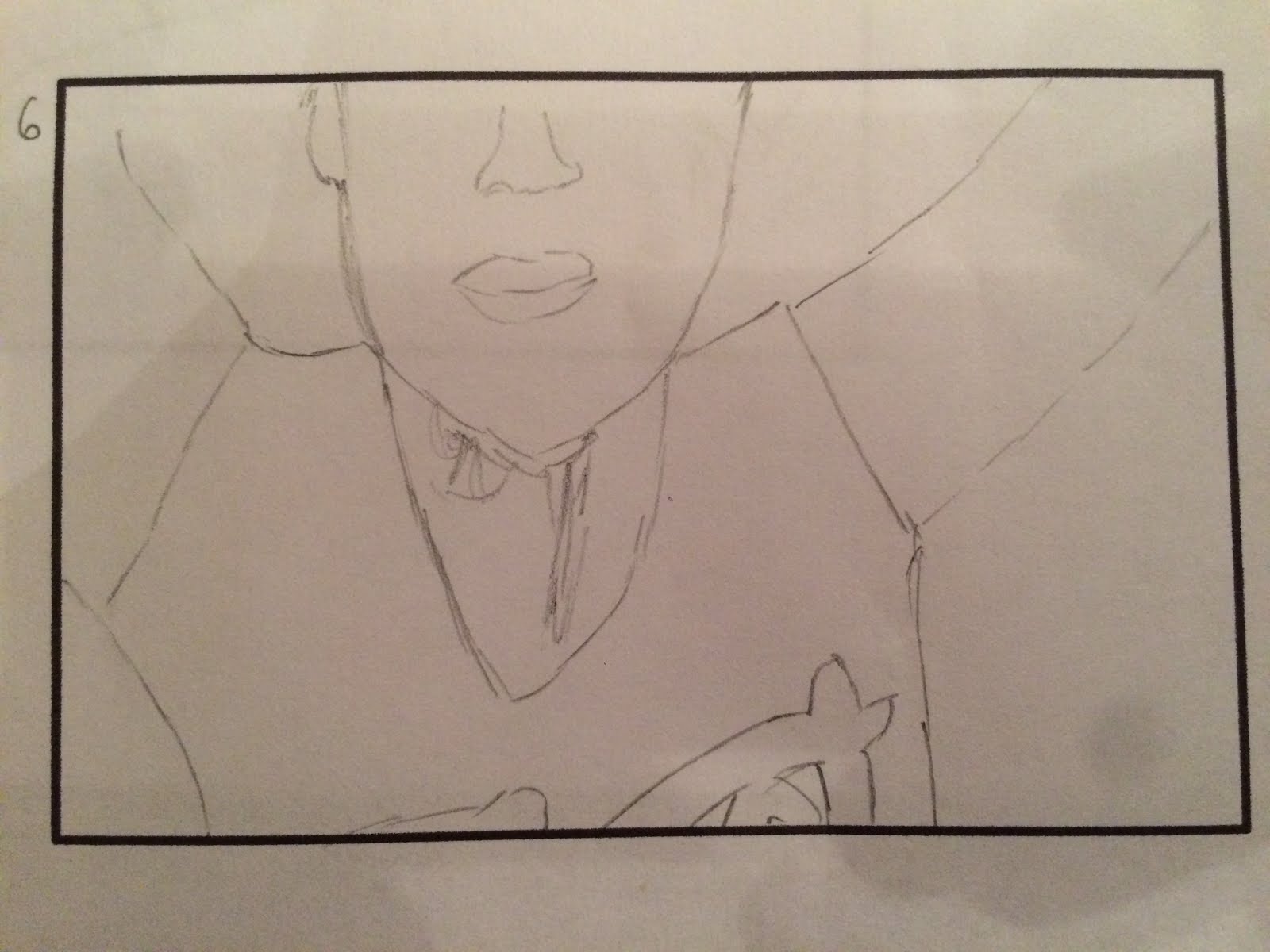
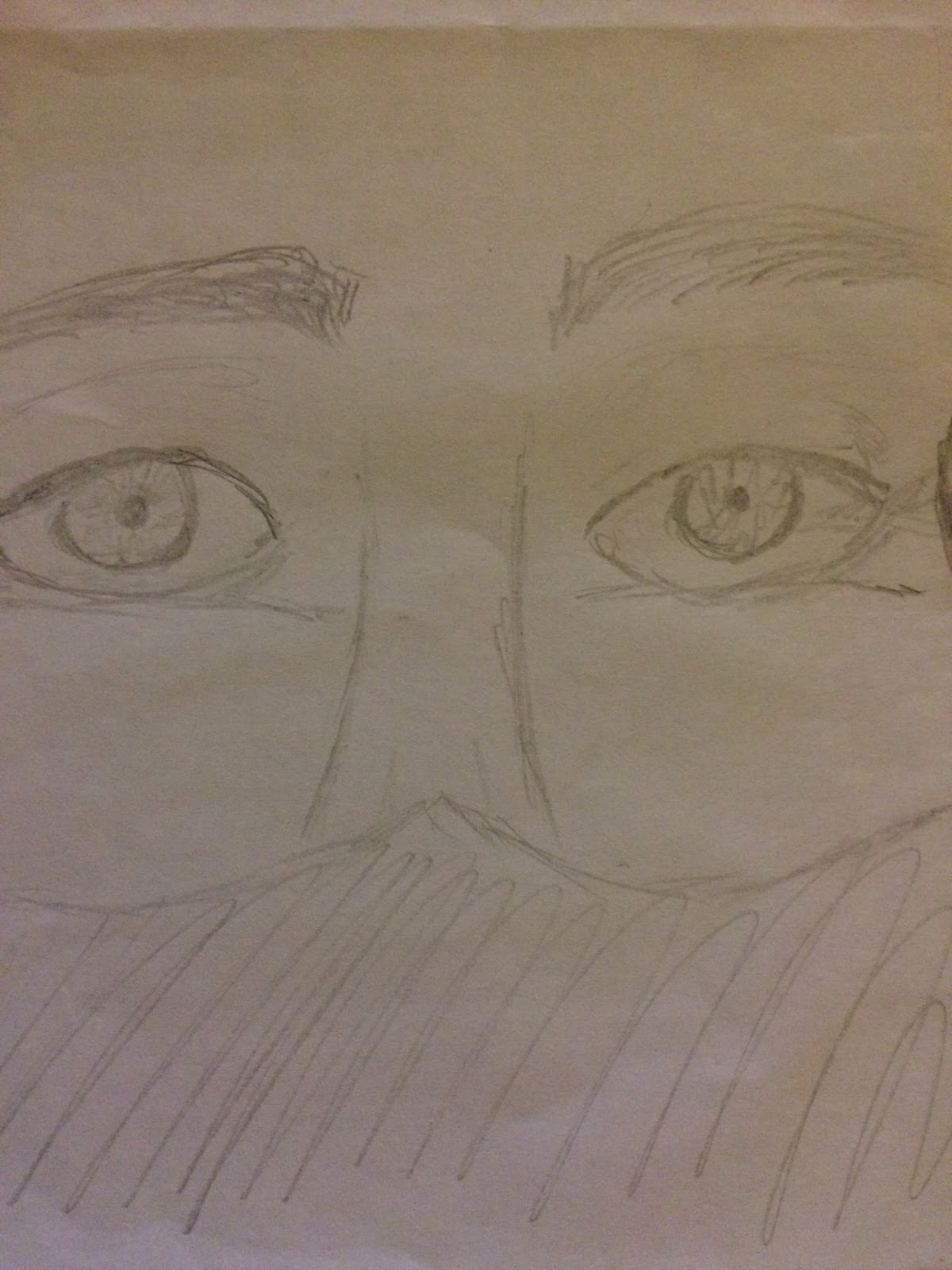
Before drafting the storyboard, as a group we composed a basic plot summary.
The summary is as follows:
A girl is out jogging in a forest when she is grabbed by an unknown figure. She then wakes in the abandoned ruins of a castle to find her self tied up. Her captor is in the ruins too, and is wearing a black mask that covers half of his face. He is also wearing a hearing aid as he is deaf. He then approaches the girl and we see him raise his arm to strike her with a knife before the opening scene cuts to black and the titles appear.
The first shot in the opening will be of the girl jogging through the forest. She is listening to music through her headphones, and is not panicked.
After a few varied shots of the girl running we see a close up of her face looking shocked and scared as a hand grabs over her mouth.
Time has passed when she wakes up in the castle ruins. The first shot in the castle ruins will be a point of view shot from the perspective of the captured girl. We will use an elliptical fade in and out to create the effect of a drowsy eye opening and closing.
We then see an extreme close up of the girl's eye, and we can see that it is bruised and that she is injured.
We will then cut to an establishing shot of the castle, to determine more about the location in which the girl is trapped. A dark figure can be seen within the ruins, but only just.
We then see a close up of the whole of the girl's face and it is revealed that she has had her mouth duct-taped shut, and her eyes look very drowsy.
A long shot of the girl kneeling with her back to the castle wall with her hands tied above her head is then seen. This further demonstrates how the girl is trapped and has no means of escape.
Mise-en-scene around the castle ruins will be shown in various shots to reveal information about the killer.
A high angle shot of the killer's table of weapons will be shown to build tension and create fear for the girl's life.
The killer is then revealed through a close up of his face. Only his eyes are visible as the rest of his face is obscured by the mask.
The scene then flashes back to the killer's previous victims. These shots will be flashed quickly on screen to leave a lasting impact and to shock the viewer.
We then see an extreme close up of the killer's eyes and it can be seen through his eyes that he is smirking, indicating he is glad at the memories of his past murders.
Another close up shot of the girl's face is shown, except that she now looks shocked and more scared.
We then see an extreme close up of the killer's hand reaching towards a sharp knife.
The final shot is of the killer raising the knife in his hand and slamming it down as the scene cuts to black and the titles appear.
We plan to use sound within our film opening as a means of conveying the killer's disability. We will do this through using point of view shots from the perspective of the killer, and in these shots we will use no sound, and possibly even add an effect of a slight ringing silence whilst action occurs, in a form of contrapuntal sound.